I have
always loved children’s books.
Children’s Literature was one of my favorite classes in college. During that time, I also worked in the
children’s section of the library at my school and loved my job.
And now,
finally, I have a child of my own, and I get to read to him to my heart’s
content. And it has opened up a whole
new world for me of all the preschool books available, which was an area I was
less familiar with, not to mention that thousands of new ones have come out
since my college days.
This is
actually sort of a hard blog to write because there are SO MANY good books out
there, but I will attempt to put them into a few categories, using books that
Cooper and I both love. Your child
probably has many that he/she loves that I don’t mention.
Dr. Seuss: These are classic. I remember my parents reading me The Cat
in the Hat Comes Back when I was a kid.
Many people cite Green Eggs and Ham as the first book their child
learned to read. Dr. Seuss wrote it
after his publisher challenged him to write a book using not more than 50
different words. The rhythm,
repetitiveness and limited vocabulary make it easy for children to begin
reading on their own. Another
interesting factoid about Dr. Seuss: his real name was Theodore Seuss
Geisel. He wrote under the name “Theo
LeSieg” (“Geisel” spelled backward) when he wrote books that he didn’t
illustrate himself.

Other Classics: Old classics are
constantly coming out in new forms. I
enjoy reading these to Cooper as he relates to the modern illustrations and, in
some cases, updated language.

Books Designed to Teach Concepts: Teaching your child his ABC’s, how to count
or factual information doesn’t need to be a chore. He can learn while sitting in your lap,
relaxing and enjoying a book together.
There are thousands of books available that teach useful things. You can begin “homeschooling” your child
without either of you even realizing you have done it.

Rhyming Books: Besides Dr. Seuss, there are a myriad of
other books that are written in rhyme.
These books are easily memorized by children (and probably by you
too). Cooper was “reading” some of these
books cover to cover almost as soon as he could talk because the rhymes stuck
in his head. Memorizing is a first step
in reading, and over time, children will begin to associate the written words
with the ones they are quoting.

Bible Story Books: I am a big fan of these. These books instill in children a love for
precious Bible stories that they will likely carry with them for the rest of
their lives.

Lift the Flap Books: “Spot” is a favorite of Cooper’s, and it is
one of many lift-the-flap books that young children love. Even I am always curious about what is
underneath.

Little Golden Books: These, too, are books that I remember from my
childhood. I don’t think they’re in
print anymore in this format; I got most of these at Goodwill. I personally don’t like books
that promote TV shows, movies, etc., a popular topic in these books, so not all
of them have appeal for me, but there are still many that do, and I am always
excited when I see the familiar “golden” spine on the shelf when I am perusing
through potential books to buy.

Touch and Feel Books: Great for young
children, Dorling Kindersley has a wonderful series, but there are many others
available as well.

Eric Carle: I love Eric Carle’s cut-paper illustrations,
and his books are designed to teach concepts such as counting, telling time and
facts about animals.

Margaret Wise Brown: Deceased since 1952, Margaret Wise Brown’s Goodnight
Moon is still on the shelf of
millions of homes where young children reside, but she has also written a
number of other books that we love. Big
Red Barn uses rhyme to teach what life is like in a day on the farm as well
as incorporating other learning concepts such as colors and counting.

Baby Einstein: This series of videos,
flash cards, books and more is very educational and enjoyable for
children. These books teach facts but
also contain captivating illustrations. Windows
to Color contains a number of classic pieces of artwork, something rarely
found in children’s books.

Richard Scarry: A childhood favorite of my husband's, these books are fun for
children to look at and help build their vocabulary. They contain many labeled pictures of objects
that children can learn to identify.

Biscuit, by Alyssa Satin Capucilli, is
a personal favorite of Cooper’s. Biscuit
is a little dog who is always getting into some sort of mischief, but who is
continually loved by “the little girl” (whose name is never revealed and whose
parents are never seen). It is easy
reading and will probably be among the first books Cooper reads on his
own. This particular volume contains 10
separate Biscuit stories.

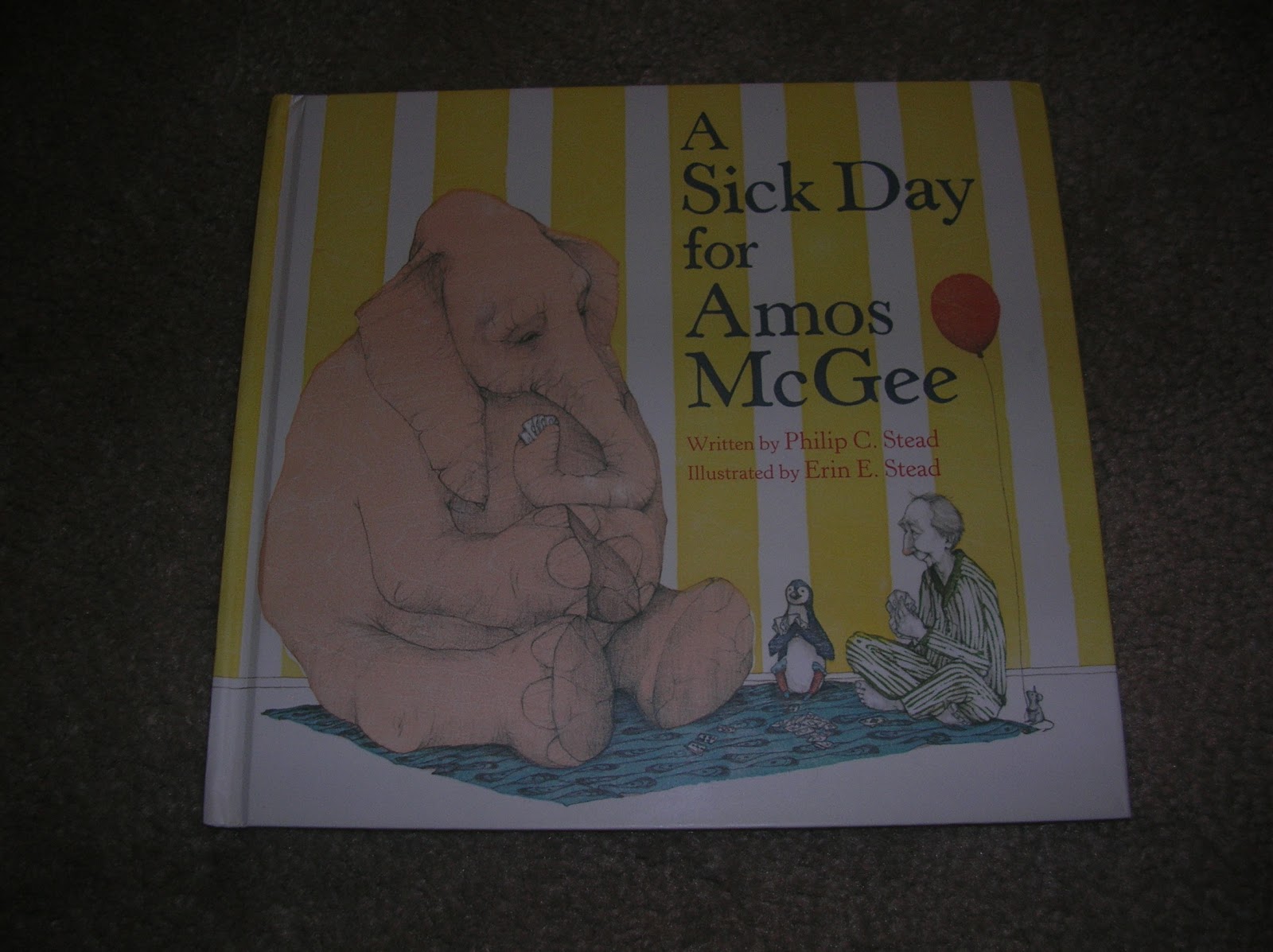
A Sick Day for Amos McGee, by Philip
and Erin Stead, is another favorite of both Cooper’s and mine. Geeky but loveable, Amos takes care of the
animals at the zoo, until one day when he is sick and the animals all come to
his house and take care of him.
I have only
scratched the surface, but hopefully I have given you some information you can
use to help you choose from the millions of wonderful books available for young
children.


